
I came back from a short trip to Gibraltar one week ago and noticed that all their road signs were metric. The only imperial units I saw on road signs there were on dual-unit restriction signs. Many showed metres only, but none showed only feet and inches. Gibraltar road signs are almost exclusively metric with only limited use of imperial units, the mirror image of the UK situation.
Gibraltar road signs use the same designs as UK road signs, but the units are different. Speed signs look the same as the UK versions but the numbers on them represent km/h. All speeds on official road signs are in km/h.
Here are pictures of road signs that I took while I was there showing the extent of metric units on road signs. These signs show the metric unit as well as the number. That makes them different from the equivalent signs in the UK where imperial units are used instead.
Distance road signs show only metres:


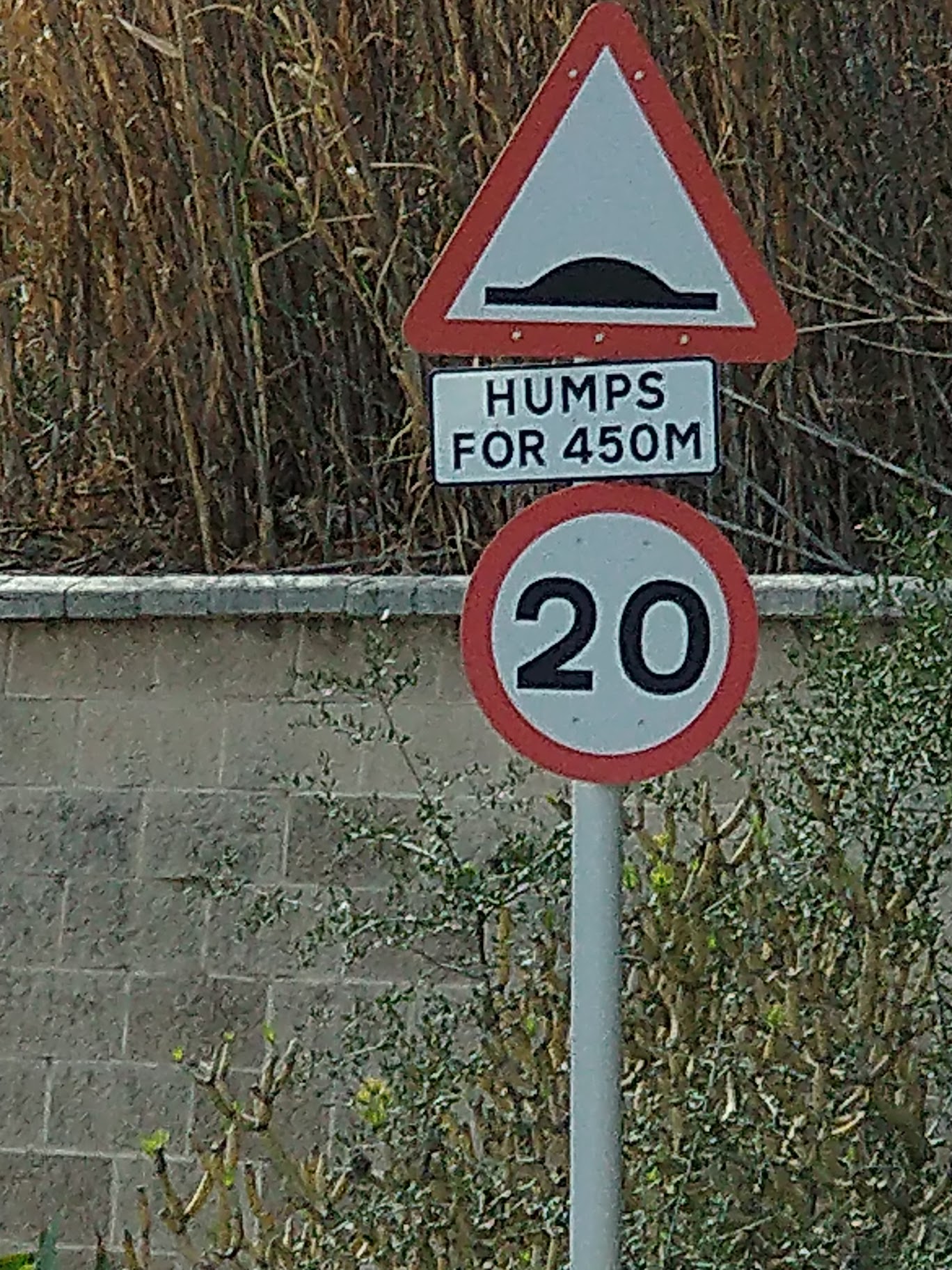
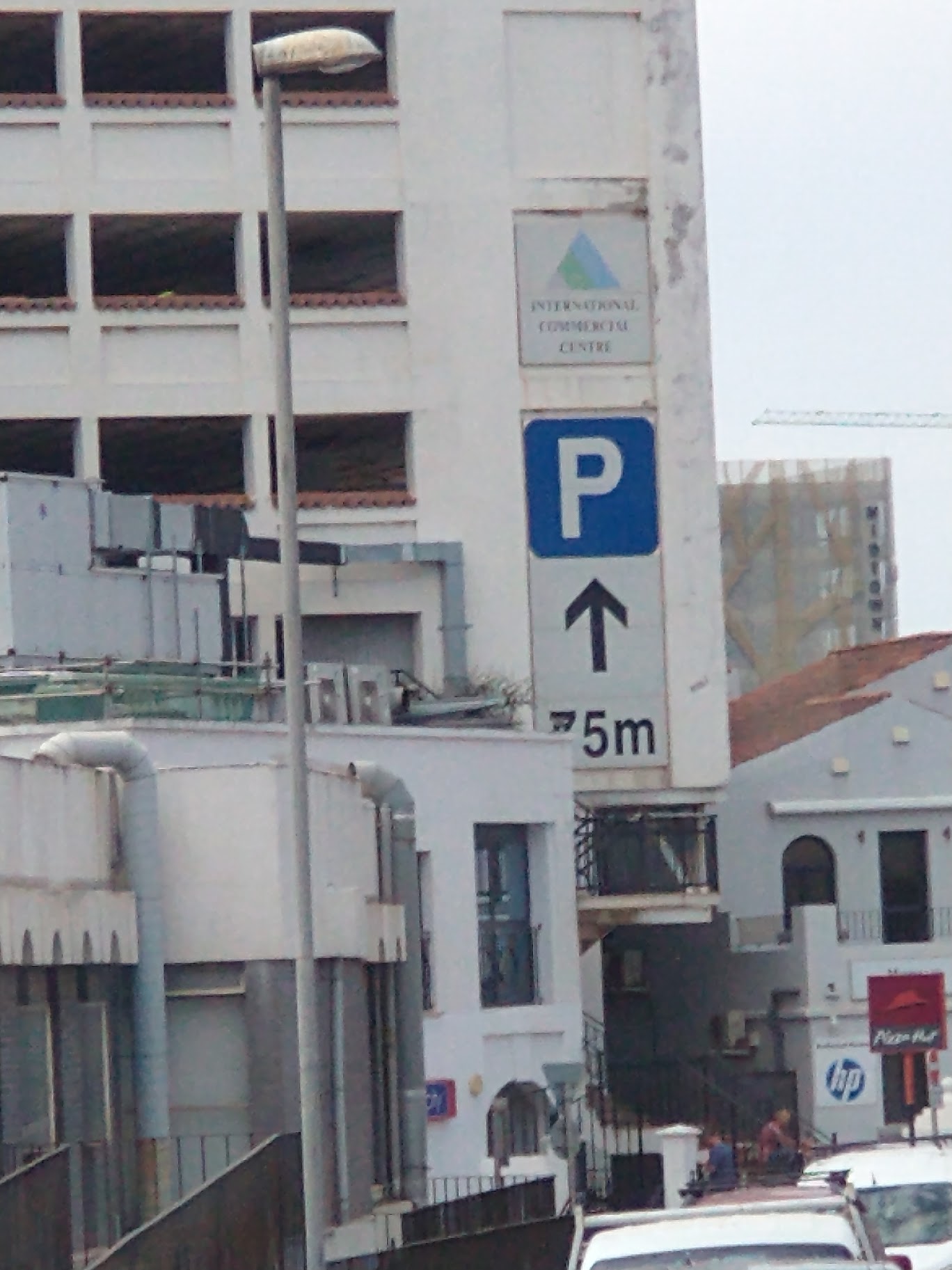
Many restriction signs show only metres:


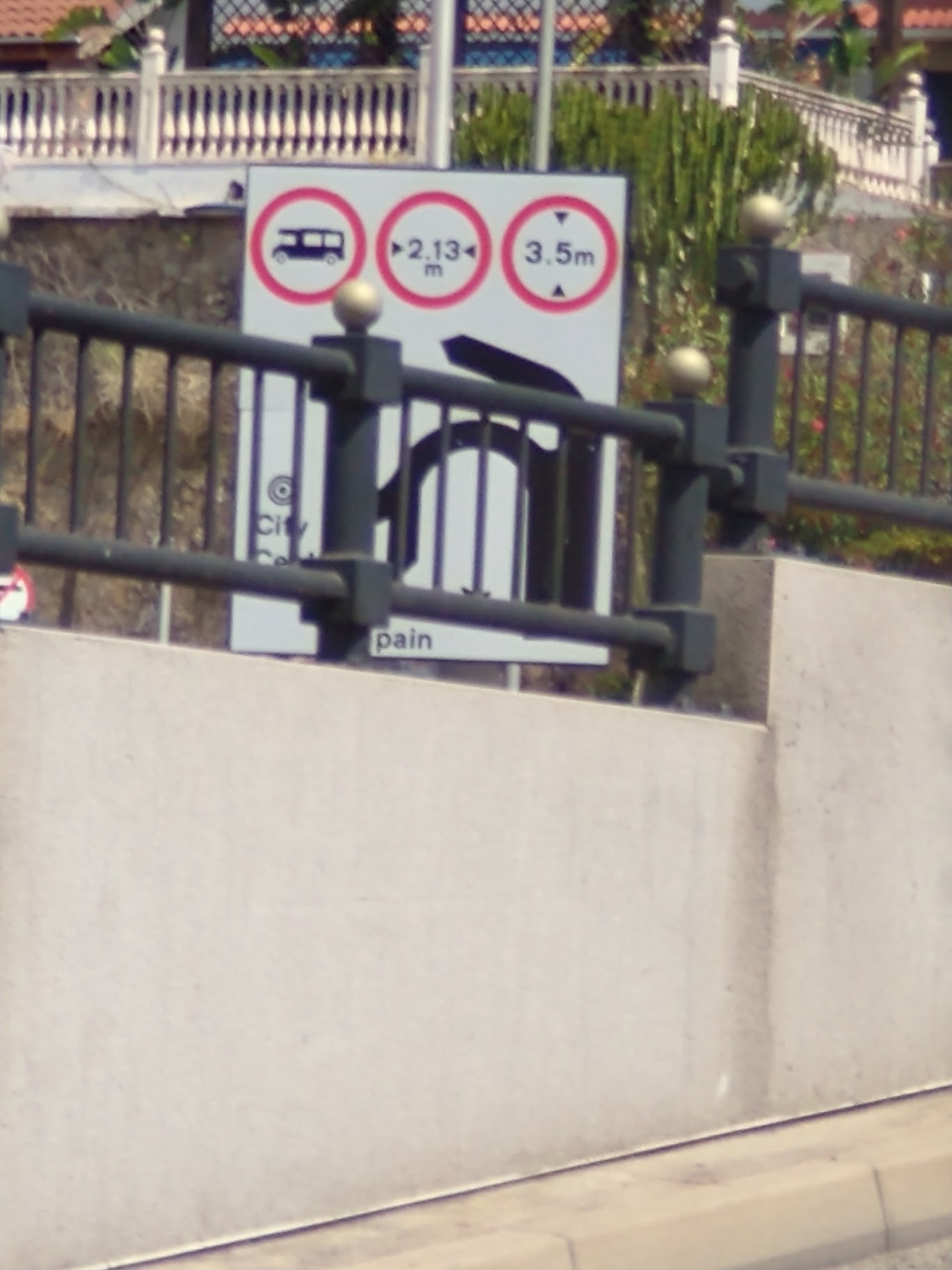
This dual sign is one of the few road signs that show imperial units:
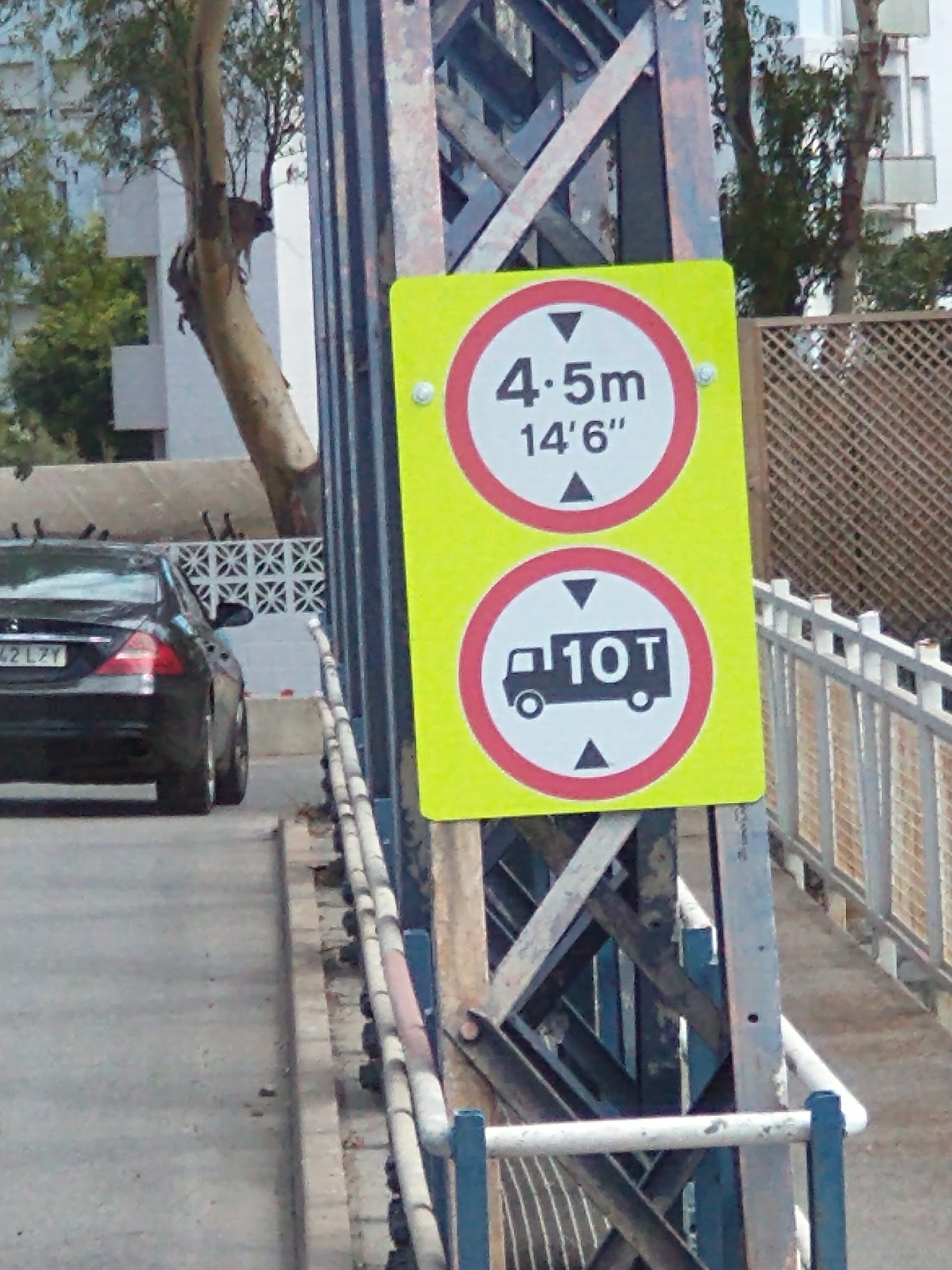
I found no road signs in Gibraltar that were exclusively imperial. Why has the UK found it so difficult to move to the metric system in road signage? Ever since the metrication of speed limits were postponed indefinitely in 1970, little progress has been made on the metrication of road signs. Gibraltar is a country with close historical ties to the UK. The UKMA website explains how some big former British colonies succeeded in the metrication of road signs. Gibraltar is not the only British Overseas Territory that uses km/h. Other British Overseas Territories that use km/h are Akrotiri & Dhekelia, Bermuda and Pitcairn Island. How did so many countries of the former British Empire succeed in metrication unlike the UK? Why has the UK failed to learn lessons from their success?
 Metric Views
It is amazing how much these signs look like the ones used in the UK, putting the obvious aside. Which begs the question. Why is the DFT so hesitant to permit metres for distance in the TSRGD? Metres are perfectly well understood amongst the general public and even if the undesirable situation of having m for miles and metres has to coexist, no one is going to seriously think that humps are 50 miles away. Even with the unnecessary clutter of ‘humps for’ it is still a lot more clearer than using, yards, yds or some vulgar fraction which the vast majority of British drivers don’t actually understand.
British road signs are generally quite good and it is a shame that they have to ruin them by clinging onto a cumbersome and antiquated measurement system, which is inconsistent with everything else.
LikeLiked by 1 person
Alex M wrote: “British road signs are generally quite good and it is a shame that they have to ruin them by clinging onto a cumbersome and antiquated measurement system, which is inconsistent with everything else.”
I fully endorse this comment. British road signs “are” good. But they are ruined by the continued use of old-fashioned units of measurement which are not used any more in wider society. Who buys anything by the yard? But we are expected to relate to yards on road signs. No other country in the world uses this antiquated unit on their road signs. Get rid of the yard and the feet and inches will go too. These antiquated units can all be expressed using the metre. It would be invigorating to see these changes implemented and our road signs upgraded and brought into the modern world.
LikeLiked by 1 person
@metricnow Get rid of the yard and the feet and inches will go too. These antiquated units can all be expressed using the metre
I am genuinely baffled that after all these years, metres for distance are still not permitted under the TSRGD and that it isn’t really brought up. Metres are perfectly well understood. It is what has been taught for well over 50 years, while things like yards and fractions of a mile have been prohibited for trade for many decades now. With a significant number of British drivers don’t understand what they are supposed to mean. Let alone the millions of foreign drivers from metric countries.
The situation is made even more absurd by the fact that everything is done internally only to require it to be unnecessarily converted to an antiquated system that fewer people actually understand. Sure, they can use the excuse that m is used for miles, but as I said above, nobody is seriously going to be confused by that, as they can easily workout from context, and there is no excuse as to why that egregious usage hasn’t already been removed.
Sure, they can come up with excuses, and there isn’t really political will to go the whole hog, but allowing metres for distance under the TSRGD would be a fairly simple thing to do at no additional cost. The local authorities would be free to phase in signs with metres on them, and groups like ARM would no longer be able to hide behind that excuse for their pathetic vandalism, although I don’t think ARM is really a thing anymore.
LikeLiked by 1 person
My only critical remarks about Gibraltar’s signs concern the lack of uniformity in presentation: from what can be seen in the signs in the photos, one uses lower case and upper case and the same sign is also shown with upper case letters only. This is probably just sloppiness. Then there’s the three different ways of presenting ‘metre’: correctly by means of the symbol m, but also by means of the capital letter M, which does not signify metre at all as a metric symbol, but rather Mega. Then there is the abbreviated form ‘mts’ on the roundabout sign. To have three different ways of displaying ‘metre’ in such a small territory is quite an achievement and that is only from what is shown in these photos. I wonder if there are any more? This really should be drawn to the attention of the authorities in the territory. Apart from that, well done to them.
LikeLike
Alex M wrote. “I am genuinely baffled that after all these years, metres for distance are still not permitted under the TSRGD and that it isn’t really brought up. Metres are perfectly well understood.”
I think the UKMA should push for metres to be allowed and yards phased out. As you say, everyone understand metres. The unit was used throughout the UK in connection with social distancing during the Covid crisis. I have the impression that the DfT realises that m means metre and not mile. There is no reason why mi cannot be used for the mile unit and m for metre in conjunction with each other.
LikeLike
@Metricnow “There is no reason why mi cannot be used for the mile unit and m for metre in conjunction with each other.”
I don’t like the idea of denoting miles with mi, as it would be adding another form of non-metric usage to an already very long overdue process. By the time you permit it in the TSRGD and phase it in, you might as well replace the signs in question with km, and besides, the TSRGD already allows miles to be shown without any mention of units, so using it is already completely unnecessary under current TSRGD rules. Besides, as I mentioned above, nobody is seriously going to be confused by it, as they can easily work out from context that a sign referring to humps being for 50m means metres and not miles. As such, they don’t have any real excuse for not permitting metres for distance in the TSRGD.
LikeLiked by 1 person
Alex M:
I take your point completely. The abbreviation mi is widely used in the USA, I believe, and I’ve seen it in Britain too. The TSRGD does indeed allow numbers of miles to be displayed on road signs with no mention of units. However, I am aware of at least one sign where m is displayed on the sign to mean both metres and miles on the same sign. That is the countdown sign to the exit from the M20 motorway to the Channel Tunnel where the distance 1/3 m is shown with a height restriction sign (for the Tunnel itself, which I find a bit weird as it’s not a bridge) in metres shown by the symbol m. When I pointed this anomaly out to the authorities years ago, I was told that the sign complies with the TSRGD. Probably you are right that nobody is seriously confused and that particular sign shows they are using m to mean both metres and miles right now, even on the same sign. By the time any change was phased in, one might as well phase in km too, as you say. But I am arguing simply for all yard units to be replaced by metres at the moment.
LikeLike
I’ve argued before for the temporary use of ‘mi’ for miles if a sign already shows ‘m’ for miles and cannot be easily or safely replaced for no other reason than the letigious state of our society means that somebody will claim that they didn’t know ‘Services 3m’ doesn’t mean they need to slam on their brakes and turn off NOW! In many cases plating the ‘m’ with ‘mi’ even temporarily in support of the larger project, to avoid somebody trying to use the courts to throw a spanner in the works.
LikeLike
I also like that Gibraltar is using up to 2 decimal places for restriction signs, which is what most countries use, instead of 1 decimal place. If only metric-only signs were allowed in the UK, there would be 2-decimal-place restriction signs.
LikeLiked by 1 person
@O Dogs Remaining: In my view, two decimal places is overkill. If the road is resurfaced, the clearance is often reduced by more than one centimetre. That is why the rule for clearances in the UK is to measure the clearance as accurately as possible, round the measurement down to the nearest 10 cm (3 in) and a further 10 cm (3 in) is subtracted from the result. Note that there is not a one-to-one correlation between the displayed metric units and displayed imperial units. (See https://adamtownsend.com/heighthunt/).
LikeLike