
Britain has lived with a measurement muddle for generations—yet the solution has been sitting on our shelves since 1965. The Use of SI Units, published by the British Standards Institution, is one of the most quietly influential documents in UK technical history. Far from being a dusty relic, it offers a clear, practical, and forward‑looking blueprint for a fully metric Britain—one that engineers, teachers, policymakers, and ordinary citizens can still benefit from today.
What makes this publication remarkable is not just its technical clarity, but its vision: a UK where measurement is simple, coherent, and internationally aligned. Amid the decades=old debates for and against metrication, this BSI report deserves a fresh look. It shows how much we’ve already achieved—and how much further we can go.
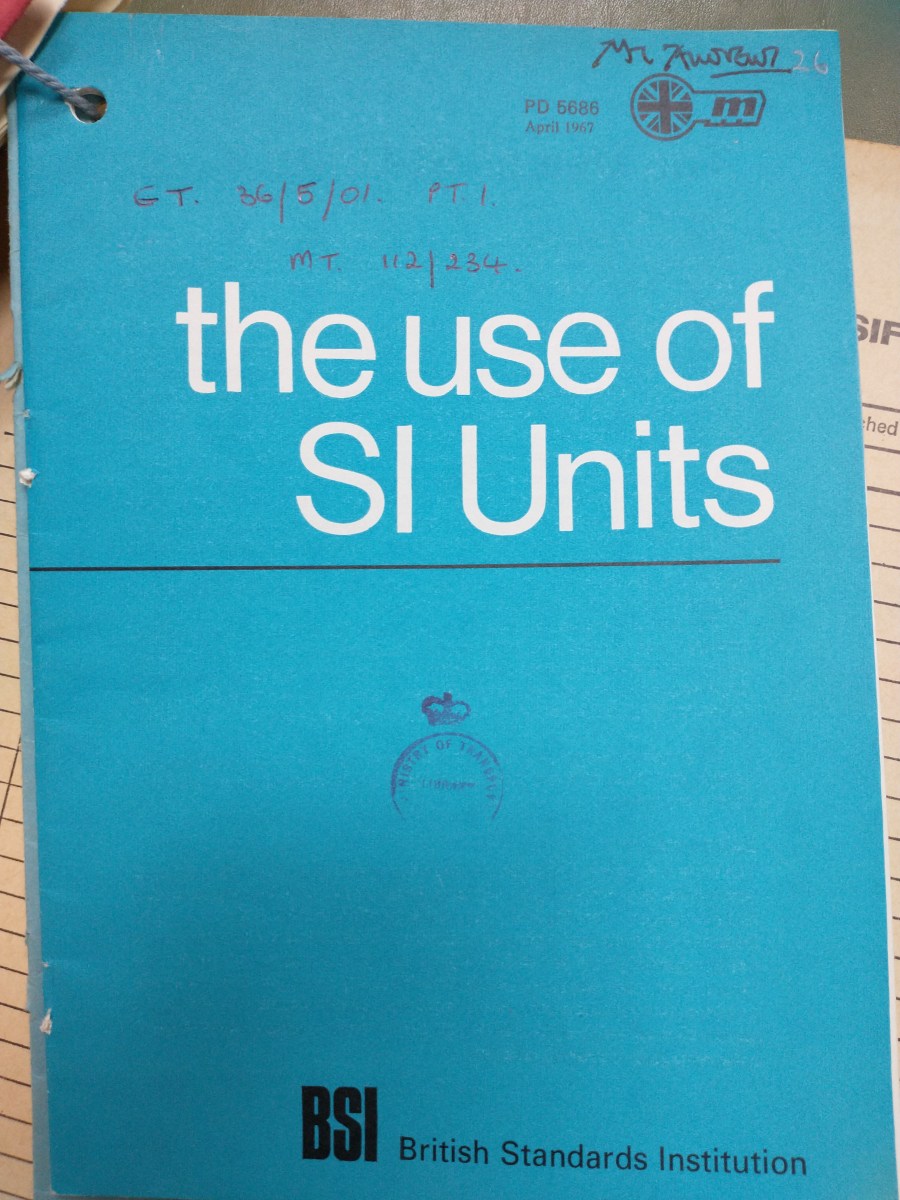
A publication ahead of its time
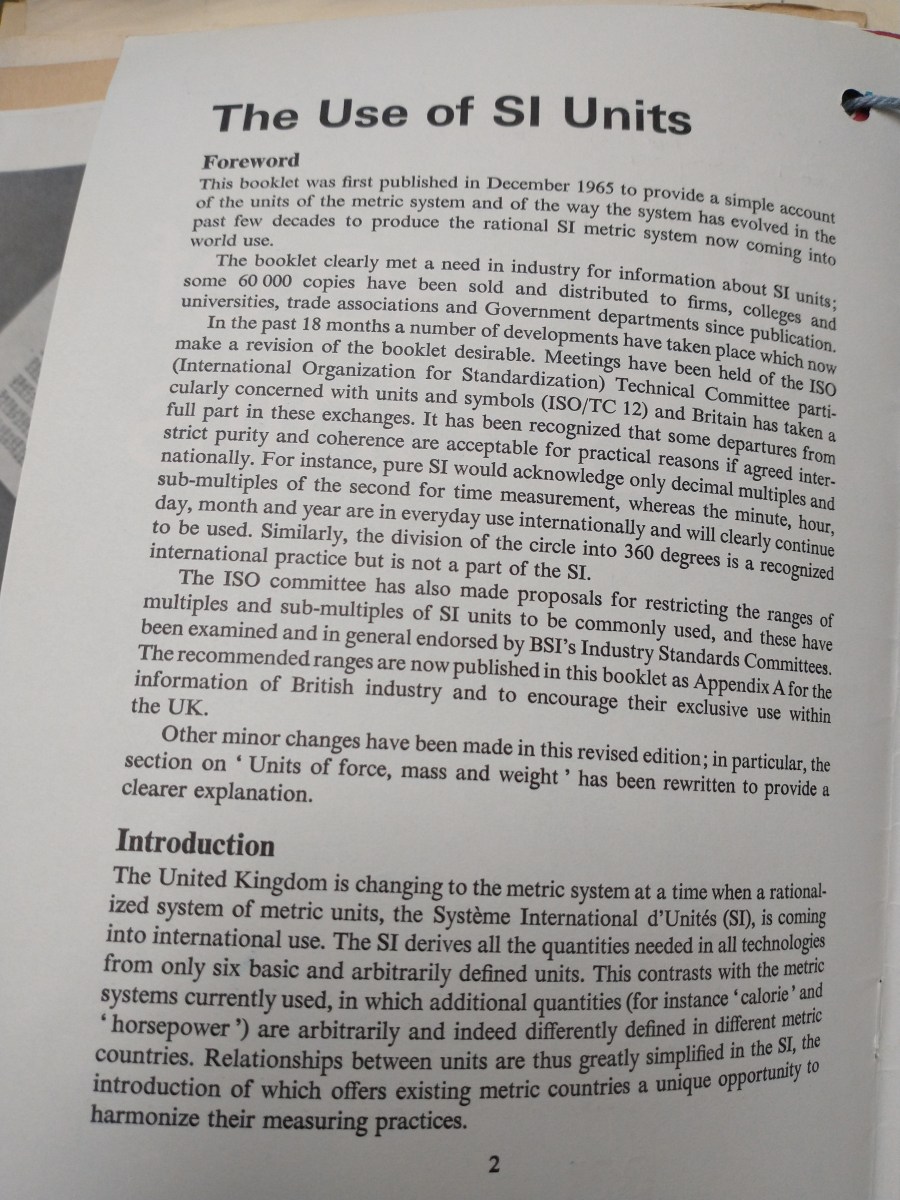
When the British Standards Institution first released The Use of SI Units in December 1965, the UK was preparing for a major transition. Industry, science, and government departments were already moving toward the International System of Units (SI), and the BSI recognised the need for a clear, authoritative guide.
The publication explained not only what SI units were, but why they mattered. It emphasised coherence—showing how SI units fit together logically, eliminating the contradictions and ambiguities that plagued imperial measures. It clarified the relationships between mass, force, weight, energy, and power, helping engineers avoid the confusion caused by gravitational units such as the kilogram‑force.
Even today, its explanations remain crisp, modern, and surprisingly accessible.
Coherence: the heart of the SI system
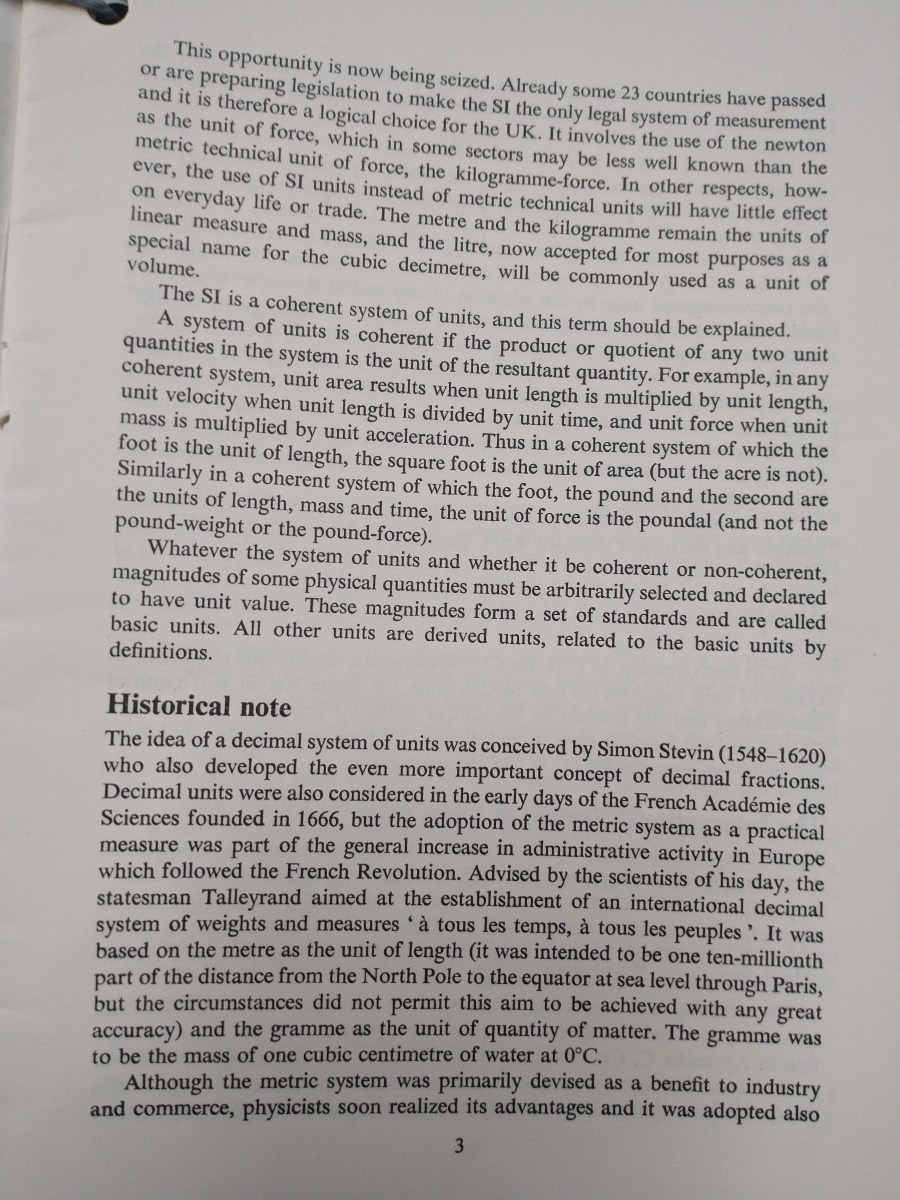
The report’s discussion of coherence remains one of its strongest contributions. It shows how SI units interlock naturally:
- area = metre × metre
- velocity = metre ÷ second
- force = kilogram × metre ÷ second²
This clarity contrasts sharply with imperial units, where force might be expressed in pound‑force, poundal, or foot‑pound depending on context.
The historical section reminds readers that SI is not a modern fad—it is the product of centuries of scientific refinement, from Simon Stevin’s decimal fractions to the rationalised MKSA system adopted internationally.
Why this matters for the UK in 2026
Despite decades of partial metrication, the UK still operates in a hybrid system. Road signs remain in miles, people buy beer in pints, and newspapers report rainfall in inches. This duality creates friction—educational, commercial, and scientific.
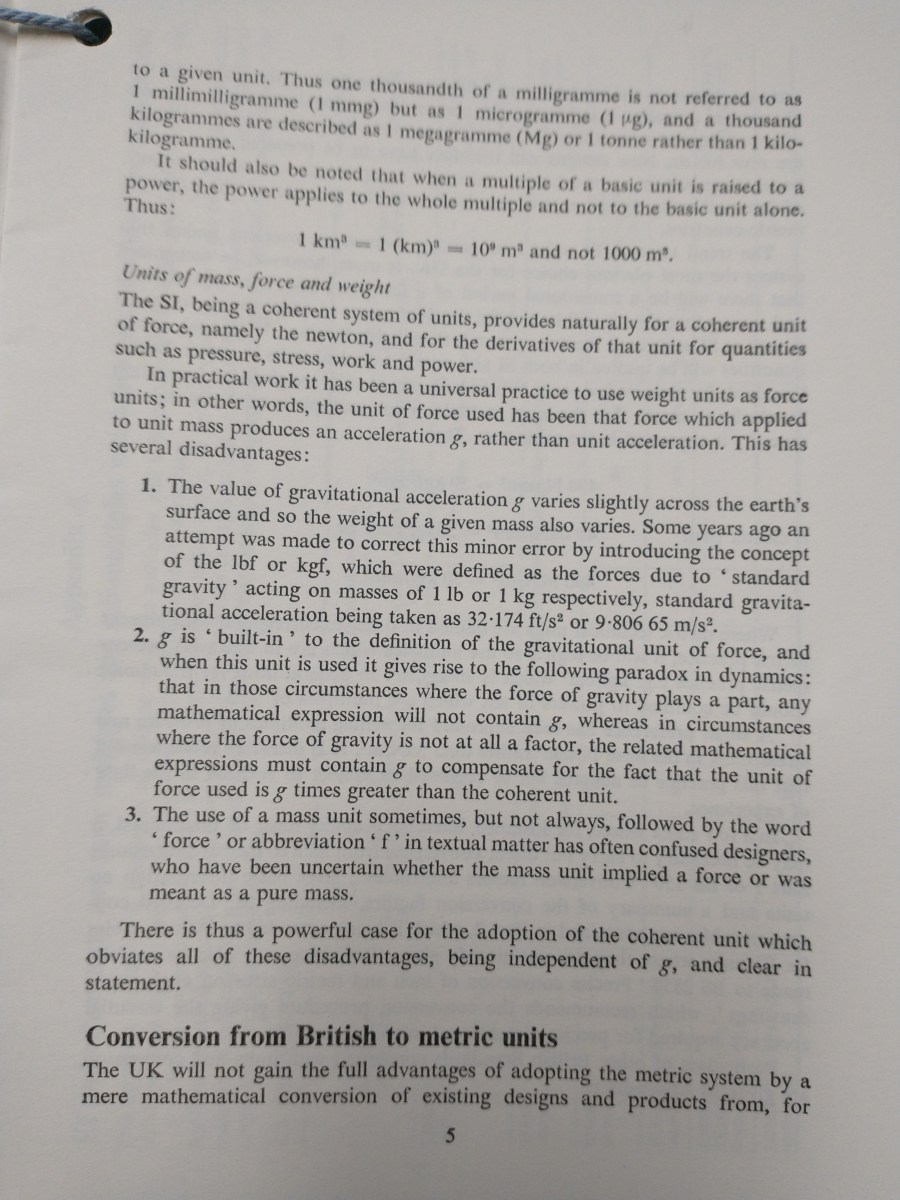
The BSI publication reminds us that the metric system is not merely a set of units; it is a framework for clarity. Its benefits are as relevant now as they were in the 1960s:
- Coherence and simplicity – SI units eliminate the need for arbitrary conversion factors.
- International alignment – Almost all major trading partners use SI exclusively.
- Educational consistency – Children should not have to learn two incompatible systems.
- Technical precision – Engineering, medicine, and science rely on SI for accuracy.
The report’s message is clear: Britain gains most when it uses SI fully, confidently, and without apology.
A reminder of what full metrication looks like
The publication includes detailed tables of base units, derived units, prefixes, and conversion factors. These are not just technical references—they are a roadmap for a country that wants to modernise.
Key themes include:
- The seven SI base units and their role in defining all physical quantities.
- Derived units with special names—newton, joule, watt, volt, ohm, tesla, lumen, lux—each defined with precision.
- Metric prefixes from kilo to nano, enabling intuitive scaling without awkward fractions.
- Clear conversions from UK customary units, showing how simple the transition can be.
The report demonstrates that SI is not complicated; it is liberating. It frees designers, engineers, and students from the inconsistencies of imperial units.
Metric prefixes: the key to intuitive measurement
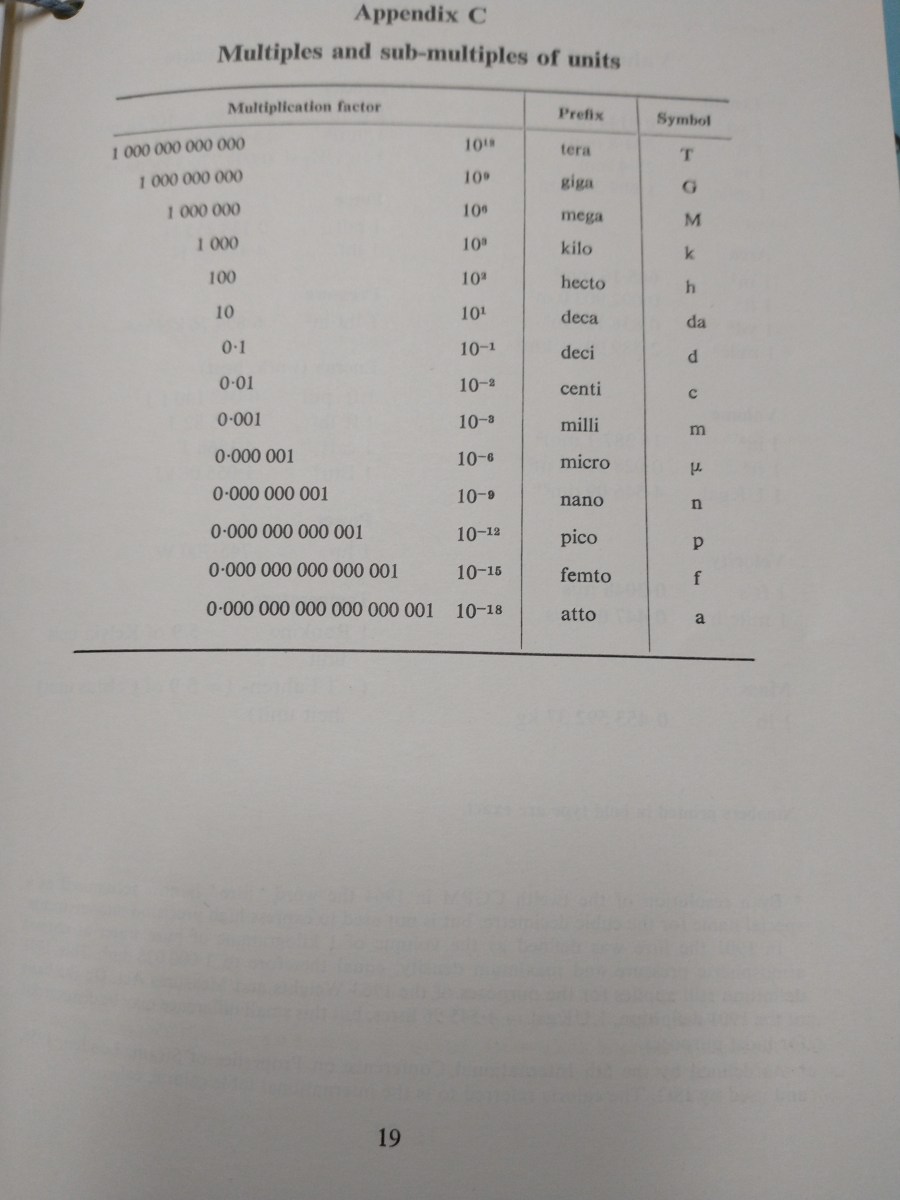
The prefix system is one of SI’s greatest strengths. It allows scaling without awkward fractions or inconsistent naming. A thousand metres is a kilometre; a thousandth of a metre is a millimetre. No exceptions, no contradictions.
Why Metric Views readers should care
Metric Views has long highlighted the UK’s measurement inconsistencies. The Use of SI Units is a reminder that Britain once had a clear, ambitious plan—and that the tools for completing the job still exist.
This publication is more than historical documentation. It is a call to action:
- To finish the work begun in the 1960s.
- To give future generations a measurement system that is logical and universal.
- To align Britain with the scientific and commercial standards used everywhere else.
In a world where clarity, precision, and international cooperation matter more than ever, SI units are not just preferable—they are essential.
Conclusion
Rediscovering The Use of SI Units shows how far the UK has come—and how far it still has to go. The BSI’s vision remains compelling: a Britain that measures in metres, kilograms, and litres without hesitation; a Britain that speaks the same measurement language as the rest of the world.
Metrication is not about abandoning tradition. It is about embracing clarity, efficiency, and global compatibility. This publication proves that the path forward has been clear for decades. It is time to walk it.


Don’t forget “stones” for weight. <:-O
Ezra aka punditgi
LikeLike
One of the benefits of using metric units has been fulfilled – children no longer learn how to manipulate two different sets of units. They do however have to learn a few conversions between metric and imperial units but they do NOT have to lean how many ounces in a pound, how many pounds in a stone, how many inches in a foot etc.
This was brought home to me a few years ago when I was giving an A Level student extra physics lessons. One of the questions that we tackled asked him what his height was. He told me “six foot”, so I handed him a 12 inch/300mm ruler and asked him what that was in metric units. He promptly measured his foot! He had no idea that one foot was 12 inches.
Today the Prime Minister announced a different emphasis in education whereby the emphasis in schools would be to prepare pupils for the workplace. They are taught almost exclusively in metric units at school but real-life measuring devices often have metric units on one side of the measuring device and imperial on the other. This is counter productive as what they are learning at school will be different to what they are seeing in the workplace.
As UKMA members will know, it is almost impossible to buy metric-only measuring devices. One solution that have pondered is to remove VAT on rulers, bathroom scales, kitchen scales, measuring jugs. While such a move might annoy certain politicians, I believe that most of the British public would not care. VAT is a tax on the final consumer so it will not affect the finances of businesses. It will however encourage high street stores to stock metric-only measuring devices (alongside dual unit devices on which 20% VAT will still be charged). Assuming that each household spends £30 per annum on such articles, the cost to the Government will be £5 per household which can be described as “chicken feed”.
LikeLike
I love it that the BBC is now describing the area with fires burning in units of “football pitches”. I guess “hectares” is too scary for them to use?
Can’t wait for the government (if it ever does) to make a real push to end the metric muddle in the UK.
Ezra aka punditgi
LikeLike
Earlier today:
https://web.archive.org/web/20260730094210/https://www.bbc.co.uk/news/live/ce8l03d90n3t
BBC: “This morning, the fire service told the BBC that about 24.7 acres (10 hectares) was on fire.”
BBC: “Suffolk County Council says the fire now covers 247.1 acres (100 hectares).”
The way the story was written gave the impression that the fire service said “24.7 acres”, and that the BBC had added the conversion to hectares.
The history has now been re-written to say that they earlier reported the areas in hectares (with acres in brackets). The original hectares-in-brackets report is gone (but the evidence is on archive org):
It now says: “As a reminder, here’s how quickly the fire has unfolded over 24 hours:
…
Thursday 08:55: We report that the fire is burning across 10 hectares (24.7 acres) – roughly the size of 14 football pitches
Thursday 12:00: Suffolk County Council says about 100 hectares (247 acres) is burning, which is a 10-fold increase in just a few hours
Thursday 17:30: The fire has grown by another 50% to 150 hectares (371 acres); that’s approximately 210 football pitches.”
https://www.bbc.co.uk/news/live/ce8l03d90n3t
LikeLike
For more fun with the BBC quoting people using imperial units, when they most probably were using metric:
“He said the plants need around 549,92 gallons (250,000 litres) of water a week and are expected to produce 50 tonnes (45,000 kg) of tomatoes”
https://www.bbc.co.uk/news/articles/c39ejjwrkg1o
LikeLike
punditgi,
The BBC doesn’t have the ability to describe anything in any units, it’s not a sentient being with the power to do so. It’s a real person who is employed by the BBC that has made a conscious decision to choose what units you hear. That person has a name and identity. you need to be more specific and tell us who is responsible for this decision.
Also, hectares are a bad choice of a unit to describe such a large area. The best unit to use would be square kilometres. But, then there won’t be much excitement when tens of thousands of hectares turn out to be only a only a tens of square kilometres.
As with the BBC, don’t lose sleep over the non-sentient government not making any decisions to complete metrication.
LikeLike
m,
I’m sure that even if the person who published the non-round acres first with a nice round number of hectares in parentheses did not get the Luddites excited that acres were used. The Luddites know it’s a mockery to them that the acres were non-round and the hectares were round, indicating those in the fire service think in SI units, never use non-SI units and it took someone in the media to do a conversion. They would only be happy if they knew that acres were used and understood and hectares were unknown to everyone.
Whoever did the conversion to imperial gallons at least got it right and didn’t convert it to US gallons, but this didn’t happen with mass, as 50 t were treated as US short tons and the result in kilograms would be 35 359.2 kg. Somebody didn’t know that 50 tonnes is 50 000 kg or better 50 Mg. One can only wonder what happens when this type of mistake happens where it is critical.
LikeLike
Daniel,
Creating abstractions and treating them as sentient entities (such as the BBC) is a very powerful cognitive tool. I suggest not undervaluing or dismissing that tool.
And it turns out I am sleeping just fine. 🙂
Ezra aka punditgi
LikeLike
punditgi,
When you blame an entire entity like the BBC or government for not using metric, you are blaming all of the employees who work for these organisations who may in fact may be working hard behind the scenes to bring about metrication. It isn’t fair to them to lump them in with the metric haters and Luddites. That’s why it is important to isolate those who work for metrication from those that work against it.
LikeLike