
On Wednesday, 9 May, the air waves and the prints were full of fanciful stories about Brussels caving in and allowing Britain to carry on using lbs, oz and other imperial units. The so-called “metric martyrs” * (Oh no, not them again!) declared a victory for their campaign. So what has really happened?
It appears that at a recent Committee meeting of the European Parliament, one of the 27 Commissioners, Günter Verheugen, indicated that, in response to lobbying from European and American exporters, he intended to propose to fellow Commissioners that the current authorisation of “supplementary indications” alongside metric units should be extended beyond its current deadline of 2009. If the Commission approves this proposal it will then have to go through the decision-making machinery of the EU before the current Units of Measurement Directive can be revised.
This has been claimed by a spokesman for the “metric martyrs” as a victory for their campaign to be allowed to weigh and price in lbs and oz. The reality is quite different.
No difference
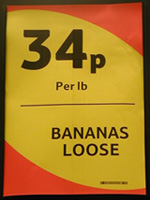
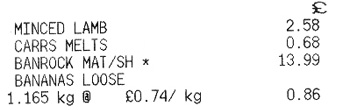
If Mr Verheugen’s proposal were eventually to be agreed as reported (big “if”), it would make absolutely no difference to the current situation. Traders will still have to price and weigh goods at the point of sale in metric units, with the option of an accompanying supplementary indication, which must be no more prominent than the legal metric unit. Most shops and supermarkets now comply with the law, and many have given up on showing lbs, oz, pints, sq yds, etc. Only a handful of recalcitrant market traders and small shopkeepers still hold out against the law, and their numbers are dwindling.
A special exemption for US imports and exports?
However, this is by no means the end of the story. The reason given for authorising supplementary indications is that the USA requires dual labelling (metric and “US customary” – not the same as imperial, by the way) on packaged goods. Thus, if the EU insists on metric-only labelling, exporters will require separate packaging for the two markets. It is difficult to see why putting an extra sticky label on a package is a significant business cost, but even if it is, there is a simple solution which need not affect the great majority of transactions within the EU. All that is required to solve the exporters’ alleged problem is a special exemption for imports of packaged goods from and exports to the USA. This is exactly what was proposed by the UK Metric Association (UKMA) in its submission to the EU consultation on revising the Directive, which can be seen at
http://ec.europa.eu/enterprise/prepack/unitmeas/depot_anwers/c-non-gov-organis/R205.pdf
It remains to be seen whether the Commission will accept the obvious logic and common sense of our proposal.
Pints and miles
Contrary to many media reports, Mr Verheugen’s proposal would not affect the status of the pint for draught beer and cider and for milk in returnable containers, nor would it affect the mile, yard, foot and inch for road signs, distance and speed measurement. The UK Government will still be required to name a date for phasing out these measures. As far as road signs are concerned, UKMA has proposed that a new deadline of 2014 should be set.
* Footnote:
The suggestion that the original so-called “metric martyrs” have been exonerated is absurd. They were properly prosecuted and convicted under the current law for using illegal scales and other offences, and all their appeals to various UK and European (!) courts were dismissed. Even if the Directive were to be amended as suggested, they would still be breaking the law. They were guilty as charged and remain so.
 Metric Views