
How many people can visualise a kilometre (or a mile for that matter)? asks Martin Vlietstra.
Continue reading “How many people can visualise a kilometre?”
How many people can visualise a kilometre (or a mile for that matter)? asks Martin Vlietstra.
Continue reading “How many people can visualise a kilometre?”
This plaintive question is posed by an inquirer who lives in south London.
Continue reading “Where can I buy metric-only scales?”
The world rail speed record was last set on 3 April 2007 by a French TGV train, reaching a speed of 574.8 km/h on a special record-setting attempt on the TGV Est route between Paris and Strasbourg.
This is well above the fastest normal TGV operational speed of 320 km/h and also beats the UK rail speed record of 334.7 km/h, set by a Eurostar train, by a very long way.
At this incredible speed it would take just under an hour to travel the 530 km between London and Edinburgh. In comparison, this route is currently operated by InterCity 225 trains which, although capable of over 225 km/h, are limited by signalling to a top speed of only 200 km/h; only 2/3 of the typical TGV speed and barely 1/3 of this world record!
Of all the traditions that are kept alive today the acre for land measurement has to be one of the daftest.
(Article by Phil Hall) Continue reading “Crazy acres”
By 1 January 2008, speed limiters will have been fitted to all recently registered, and many older, buses, coaches and goods vehicles over 3.5 tonnes.
Continue reading “New motorway speed limits for goods vehicles?”
At the time of writing this article, the BBC is reporting on its website that in today’s budget, “Duty on beer and cider rises 1p a pint“.
The National Blood Service are understandably concerned that not enough people are coming forward to donate blood. There are, no doubt, a variety of reasons why people are inhibitied from doing so, e.g. can’t spare the time, nervousness about the procedure etc.
I wonder though whether the information about the amount of blood taken at each session may be a factor.
(Article by Phil Hall)
Tesco is phasing out ‘kcal’ from the nutrition information on food products. Only ‘kJ’ will be used. (Information provided by Philip Bladon, and edited by Derek Pollard). Continue reading ““Farewell” to the Calorie?”
Sky News are currently giving weather forecasts for individual cities on their morning show in the form of icons in the corner of the screen.
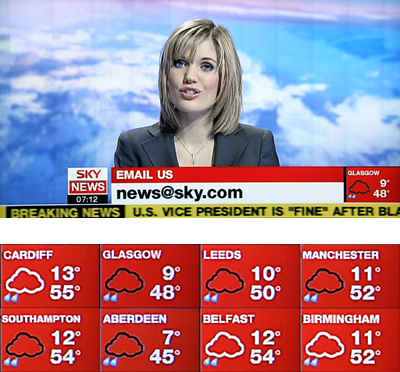
On seeing two temperatures for each city, you might expect that they are minimum and maximum temperatures, as is conventional for city forecasts. But these temperatures are more reminiscent of those found in the Middle East.
Even after using the international standard Celsius system for 40 years, it seems that we are expected to realise that the pairs of figures shown are actually both maximum temperatures, but using two different systems.
When will the media make it easier for us all, and stick to one standard temperature scale?
Highway authorities have provided metric and Polish language signage for Polish motorists but continue to ban metric signs for the rest of us.
A report in yesterday’s news media describes how Cheshire highway authorities have erected Polish language signage http://www.thisislondon.co.uk/news/article-23385653-details/Road+signs+in+Polish+-+bonkers+says+Tory+MP/article.do. The reason for this is the large number of Polish motorists who have been getting lost. The pictures in the article even show that the authorities have thoughtfully provided distances in metres.
It is astonishing that Polish signage has been erected when any vehicles driving in Britain from abroad face the challenge of miles per hour speed limits and distances marked in miles and yards. It is not easy to follow speed restrictions when your speedometer is marked only in km/h. Department for Transport estimates that typical day there are 12,000 foreign lorries and 95,000 British ones on the country’s roads; 11% of the lorries.
While having nothing against Polish visitors, have the highway authorities thought about those metric-educated drivers in this country? Education has been all-metric since 1974 yet over a generation of young adults have been forbidden from using it by DfT’s imperial signage policy. British roads are designed, surveyed and built using metric but anachronistic traffic sign rules continue to ban the metre and kilometre (http://www.ukma.org.uk/Transport/index.htm).
 Metric Views